
How Long Does It Take to Sell Land? Real Timelines, Factors, and What to Expect
Friday, February 6, 2026

One of the most common questions landowners ask is, “How long will it take to sell my land?” Unfortunately, land does not follow the same predictable patterns as residential real estate. Some parcels sell quickly, while others remain on the market for months—or even years—without serious interest.
The reason is simple: selling land is influenced by far more variables than most people realize. Location, price, and selling method all matter, but so do timing, weather, and access to the property. In many cases, when you try to sell land can be just as important as how you sell it.
Understanding realistic timelines—and what can extend them—helps landowners avoid frustration and make informed decisions.
Why Selling Land Takes Longer Than Selling a House
Homes are designed for immediate use. Buyers can walk through them, visualize living there, and often secure traditional financing. Land is different. Buyers usually need a specific purpose—building, recreation, agriculture, or long-term investment—before a purchase makes sense.
That narrower buyer pool alone slows things down. On top of that, many lenders are reluctant to finance vacant land, or they require large down payments and strict terms. This limits demand even further.
Land buyers also tend to be more cautious. Surveys, zoning research, environmental considerations, and access verification often happen before an offer is made. Each step adds time and uncertainty, stretching the overall timeline.
Average Time to Sell Land (By Selling Method)
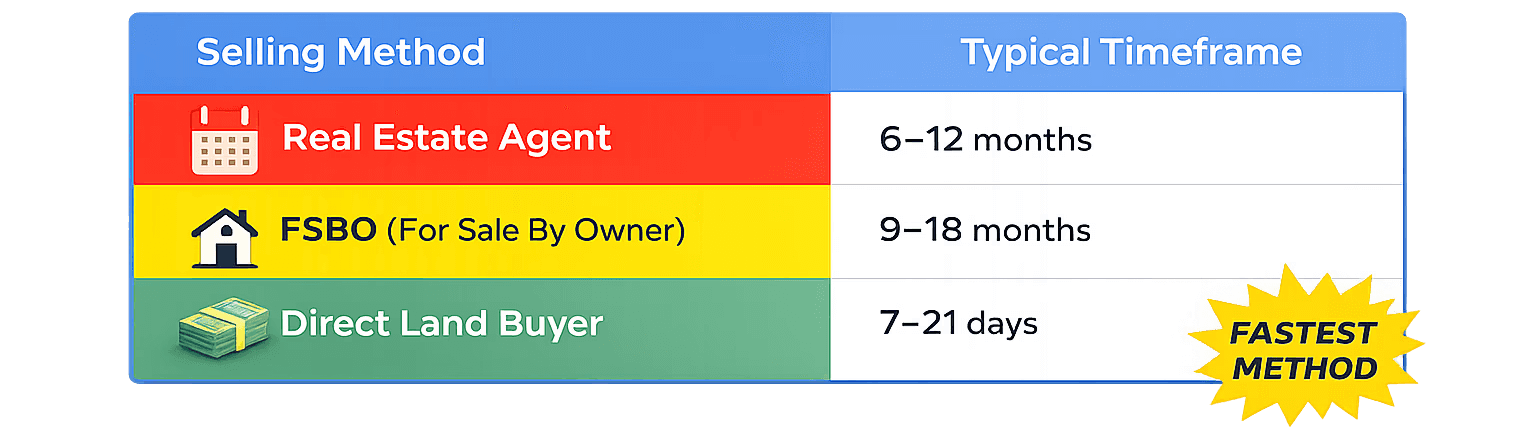
These are averages. Some land sells faster, but many properties exceed these timelines—especially when seasonal and access-related challenges are involved.
Seasonality: An Overlooked Factor That Slows Land Sales
One factor many landowners underestimate is seasonality. Unlike houses, land often becomes harder to evaluate and access during certain times of year.
Winter and Snow
In colder climates, winter can significantly delay land sales. Snow-covered properties make it difficult for buyers to:
See boundaries and terrain
Evaluate slope, drainage, or buildability
Confirm road access
If access roads are unplowed or impassable, buyers may not even visit the property. As a result, many buyers simply wait until spring, extending the time on market by several months.
Spring Thaw and Mud Season
In rural areas, early spring can be just as challenging as winter. Melting snow often turns dirt or gravel roads into mud, making properties difficult—or impossible—to access. Buyers may hesitate to visit land if they can’t reach it safely with a standard vehicle.
This period often creates a temporary slowdown in activity, even in markets where demand is otherwise strong.
Summer and Early Fall
Late spring through early fall is typically the most active period for land sales. Roads are accessible, vegetation is visible, and buyers can better assess the property’s potential. This is when most land showings and offers occur.
Late Fall
As weather becomes unpredictable and daylight shortens, buyer activity often slows again. Many buyers postpone decisions until the following year, especially if they don’t need to act immediately.
Access Issues Can Extend Timelines Significantly
Access is one of the biggest variables in how long land takes to sell. Properties with:
Seasonal roads
Private easements
Overgrown access paths
Snow-covered or muddy entrances
often sit longer on the market. Buyers may struggle to locate the property or feel uncertain about year-round usability. Even motivated buyers may delay making an offer until they can physically inspect the land. If buyers can’t easily find or walk the property, interest drops sharply.
Selling With a Real Estate Agent: Timeline Expectations
When selling land through a real estate agent, the property is typically listed on the MLS and marketed to retail buyers. While this can increase exposure, it doesn’t eliminate seasonal slowdowns.
Agent-listed land often sits longer during winter or poor weather conditions, especially in rural areas. Even when interest exists, buyers may wait months for better access before moving forward. Financing delays and buyer contingencies can further extend timelines.
For owners who are flexible and willing to wait, this approach may eventually lead to a sale—but patience is required.
FSBO Land Sales and Seasonal Delays
FSBO land sales are often the most affected by seasonality. Without professional photos, signage, or consistent marketing, buyers may struggle to locate or evaluate the property—especially when weather limits visibility.
FSBO listings frequently pause during winter and resume in spring, effectively adding months to the selling timeline. For owners living out of state, coordinating showings or answering buyer questions during poor weather can be especially challenging.
Why Direct Land Sales Bypass Seasonal Delays
Selling directly to a land buyer largely removes weather-related obstacles. Direct buyers typically evaluate land using parcel data, maps, zoning records, and local knowledge rather than relying on seasonal access or showings.
Companies like MPL Land Investing specialize in vacant land and are familiar with seasonal access challenges. Because purchases are made as-is and without financing, sales are not delayed by snow, mud, or limited visibility.
For sellers who want to avoid waiting for the “right season,” this approach can dramatically shorten the timeline.
Why Longer Time on Market Has Real Costs
Every extra month a property sits unsold comes with ongoing costs:
Property taxes
Potential HOA or association fees
Ongoing uncertainty and mental burden
Many landowners initially plan to wait for the best season, then wait again for the next one. Over time, holding costs accumulate, and selling becomes more stressful than expected.
In some cases, accepting a faster sale provides better overall value than waiting through multiple seasons.
Choosing the Right Timeline for Your Situation
There’s no single right answer for every landowner. The best approach depends on your priorities:
If you’re not in a hurry and your land has easy year-round access, listing may work
If you want control and are prepared for seasonal slowdowns, FSBO is an option
If you want certainty regardless of weather or season, selling directly may be the simplest path
For inherited land, remote property, or land in areas with harsh winters or difficult access, many owners decide that avoiding seasonal delays is worth more than holding out for peak market timing.
Selling land almost always takes longer than selling a house—but weather, seasonality, and access can extend timelines even further. Snow-covered parcels, muddy roads, and limited visibility often delay buyer decisions for months at a time.
Understanding these factors allows landowners to plan realistically rather than waiting indefinitely for the “perfect time.” In many cases, the fastest sale isn’t about the market—it’s about choosing a strategy that works regardless of the season.
About MPL Land Investing
MPL Land Investing is a family-owned company that buys and sells vacant land. We work directly with landowners to provide fair, transparent deals, offering cash purchases, flexible timelines, and thoughtfully marketed properties for buyers—no commissions, no pressure, and a smooth process from start to finish.
Let's Connect
Follow us @MPLLandInvesting







What's Your Land Worth?
Request a Cash Offer
Offers vary based on property location, size, and market conditions.
